WhoGoes vs Event Organizer Attendee Lists: $29 vs $5K to $20K
$29 vs $5K to $20K
Quick answer: Event organizer attendee lists cost $5,000 to $20,000, require sponsorship, arrive weeks late, and include no-shows. WhoGoes provides verified attendee contacts with LinkedIn proof of attendance starting at $29, available in real-time before, during, and after the event.
Event organizer attendee lists have been the default for post-event outreach for decades. But they come with a price tag that's hard to stomach unless you're a title sponsor, and even then, the data has real problems.
Most organizers bundle attendee data with sponsorship packages starting at $5,000. Some events won't share attendee data at all, regardless of what you're willing to pay.
WhoGoes offers an alternative: verified attendee lists sourced from public LinkedIn activity, available for any of 1,200+ trade shows, starting at $29. For the broader picture of what a trade show attendee list is and how to spot lists that have actual proof of attendance versus padded registration files, see the WhoGoes blog. Try it on a flagship like HIMSS 2026 and the difference shows up immediately.
Key Takeaways
- Organizer lists cost $5K to $20K per event, usually require sponsorship, and arrive weeks late
- According to CEIR, 20-30% of trade show registrants are no-shows, meaning organizer lists include dead contacts you're paying a premium for
- WhoGoes contacts all have LinkedIn proof of actual attendance, not just registration
- WhoGoes is available in real-time (before, during, and after the event); organizer lists arrive after the show ends
| Feature | WhoGoes | Event Organizer Lists |
|---|---|---|
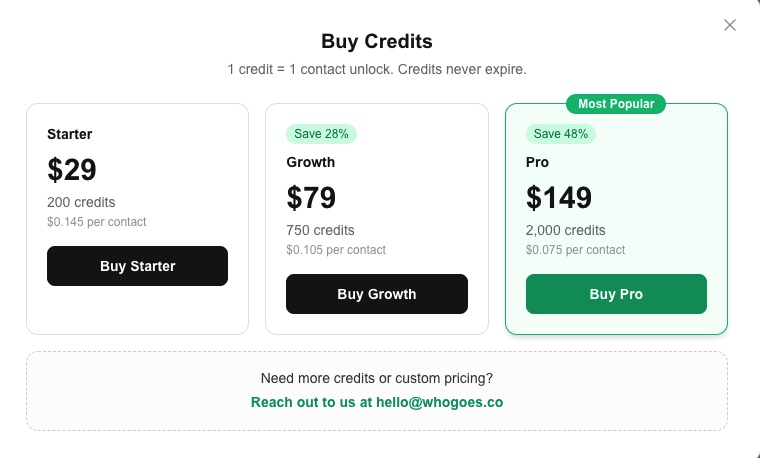
| Price | From $29 (200 contacts) | $5,000 to $20,000+ |
| Sponsorship required | No | Usually yes |
| Availability | Real-time (before, during, after) | Days/weeks after event |
| LinkedIn proof | Included, linked to source post | Not included |
| Verified emails | Included | Sometimes included |
| Coverage | Contacts who posted about the event | All registrants (including no-shows) |
| Events available | 1,200+ trade shows | Only events you sponsor |
| Contract required | No, pay-as-you-go, credits never expire | Annual sponsorship contracts |
The Problem With Organizer Lists
Three real problems. Consistent ones. I've talked to enough sales teams to know the pain points that keep surfacing: the cost is prohibitive for most teams doing more than one or two events per year, the timing means you're always following up after your competitors, and the quality issues with no-shows mean you're paying a premium price for a list that includes 20 to 30 percent dead contacts.
- Cost. $5K to $20K per event, usually bundled with sponsorship. For companies attending 5 to 10 events per year, that's $25K to $200K just for attendee data. Most teams can't justify that spend.
- Timing. Most organizers share lists days or weeks after the event. By that point, your competitors have already followed up. The 48-hour post-event window (when response rates are highest according to TSNN) is gone.
- Quality. Organizer lists include everyone who registered, including no-shows and people who used fake emails at registration. According to CEIR, roughly 20-30% of registrants at major trade shows never show up. That's a lot of dead contacts.
Why LinkedIn Proof Matters
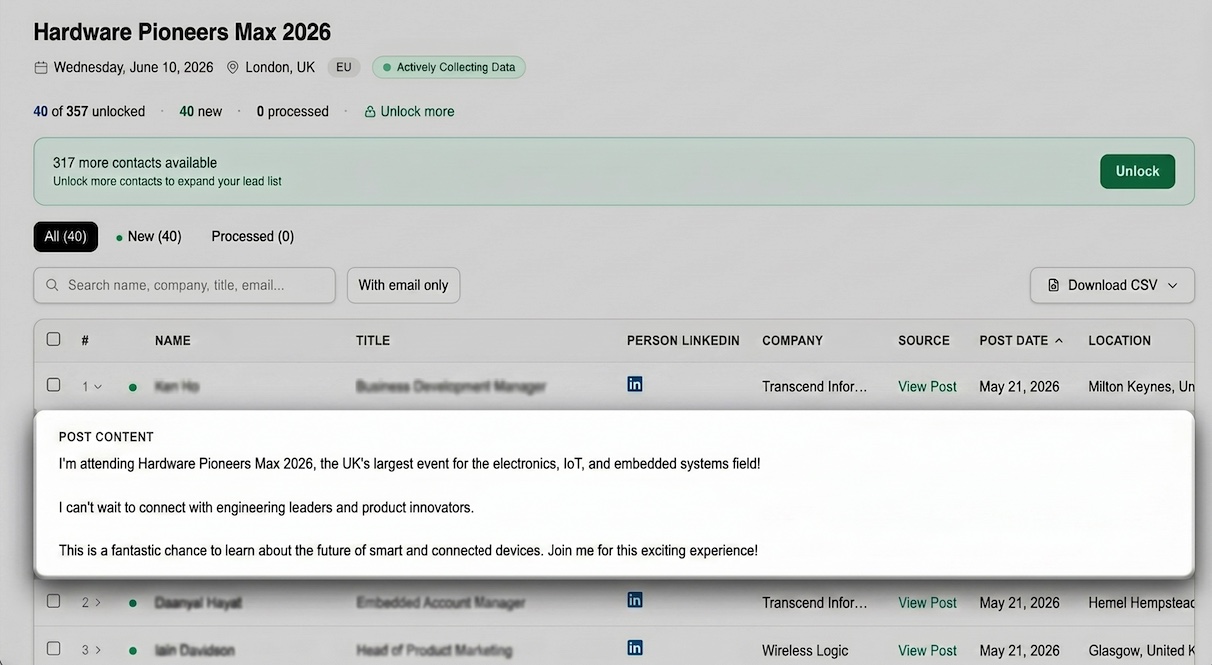
WhoGoes takes a different approach entirely. Instead of relying on registration data, it monitors public LinkedIn posts about trade shows. Every contact in a WhoGoes list has verifiable proof that they engaged with the event: they posted about it, shared photos, or mentioned attending. Proof matters. A lot. This sounds like a small detail, but it changes the outreach conversation entirely — you're reaching out to people who were genuinely there and engaged, not just names on a registration form who may or may not have shown up, and that distinction is exactly what lets you open with a specific, credible reference instead of a generic cold email template.
Who Should Buy Organizer Lists?
Organizer lists still make sense in a few specific situations:
- You're a title sponsor and the list is included in your package already (don't leave it on the table)
- You need 100% of registrants regardless of whether they actually attended
- The event is very small (under 100 people) and WhoGoes may not have coverage yet
For everything else, the math doesn't work in the organizer's favor. Narrow use case. Very narrow. Unless you're already spending $5,000 to $20,000 on a sponsorship package where the attendee list is essentially included, paying that same amount separately for a list that includes 20 to 30 percent no-shows is a hard argument to make to any sales or finance team.
Who Should Use WhoGoes?
Better choice. Clear winner. WhoGoes is the better choice if you:
- Attend multiple events per year and can't afford $5K+ per list
- Want lists before or during the event for pre-event outreach and meeting booking
- Need verified emails and LinkedIn proof of attendance
- Want to access attendee data for events you didn't sponsor
Most teams qualify. Simple check. If you attend more than one trade show per year and the cost of sponsorship-bundled data exceeds your outreach budget, WhoGoes gives you verified, LinkedIn-sourced attendee contacts at a price point that even individual SDRs can expense without a procurement process.
Ready to get your attendee list?
Browse 1,200+ trade shows. 5 free preview contacts per event.
Browse Events FreeBottom Line
Event organizer lists cost $5K to $20K, arrive late, and include unverified registrants (including 20-30% no-shows). WhoGoes gives you verified attendee data with LinkedIn proof, like our HIMSS attendee list, starting at $29 and available in real-time. For most B2B sales teams covering multiple events per year, the math isn't close. Not even close. Clear winner. If you're covering three or more events per year and don't have a title sponsorship that includes the attendee list, WhoGoes delivers verified, LinkedIn-sourced contacts in real time for a fraction of what organizers charge for slower, lower-quality registration data.
Related: What Is a Trade Show Attendee List?, a complete guide to attendee lists and the five ways to get them for any event.
More comparisons: WhoGoes vs VisitorsList, WhoGoes vs Bombora, and WhoGoes vs Vendelux.